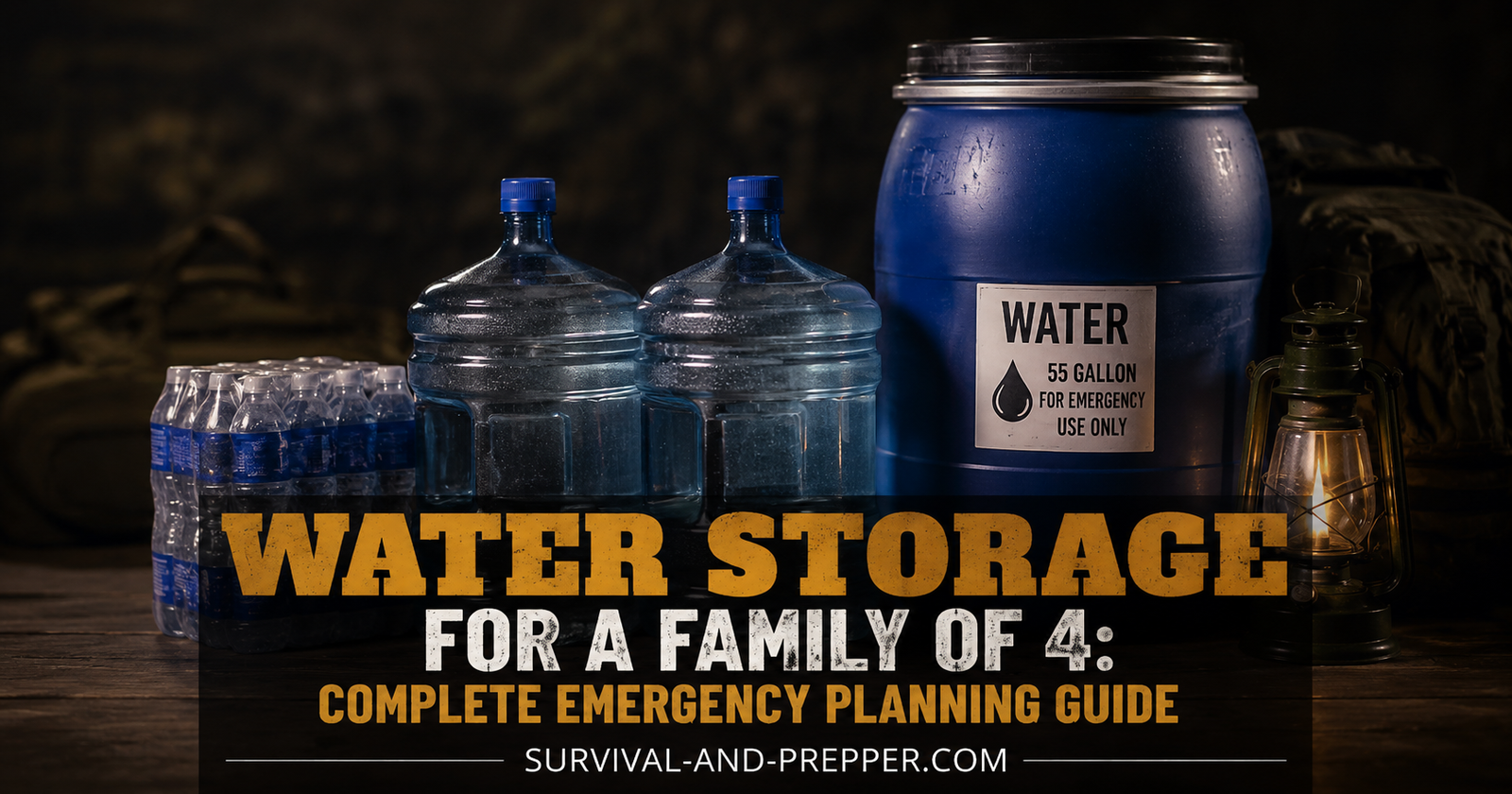
Water Storage for a Family of 4: Complete Emergency Planning Guide
When building an emergency preparedness plan, one of the most overlooked supplies is water. Most people focus on food, flashlights, batteries, and generators, but water is the one resource that becomes critical almost immediately during a disaster.
Whether you are preparing for hurricanes, severe storms, flooding, winter weather, or other emergencies, understanding how much water a family of four needs can help you avoid dangerous shortages when normal services are disrupted.
[INSERT FEATURED IMAGE: Family water storage supplies including water jugs, bottled water, and emergency storage containers]
How Much Water Does a Family of 4 Need?
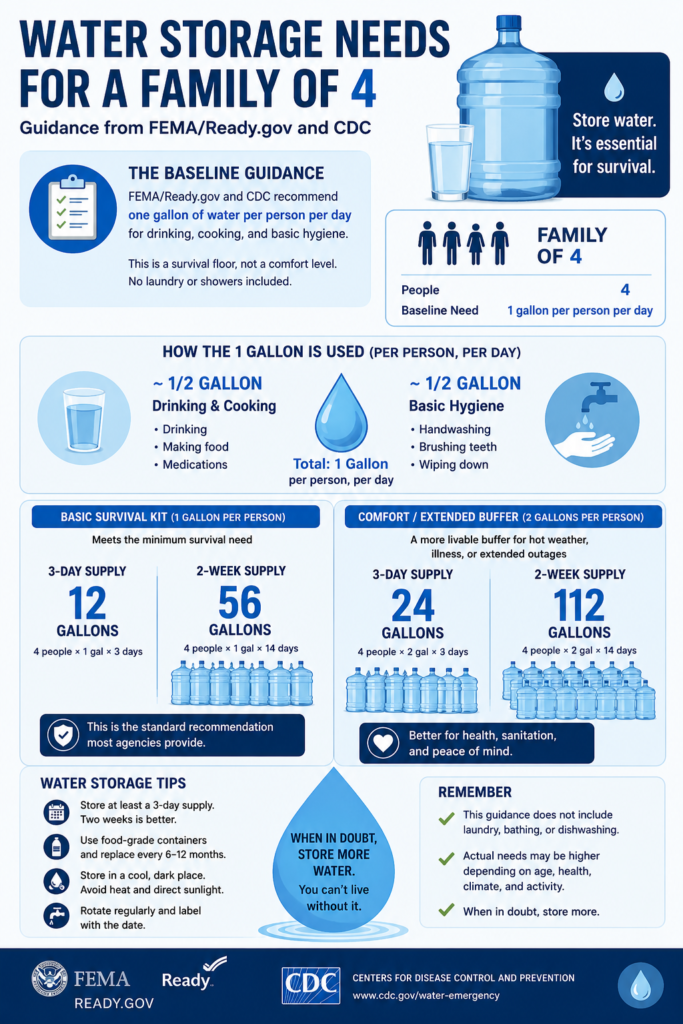
The commonly recommended minimum is one gallon of water per person per day. For a family of four, that means:
| Duration | Minimum Water Needed |
|---|---|
| 3 Days | 12 Gallons |
| 7 Days | 28 Gallons |
| 14 Days | 56 Gallons |
| 30 Days | 120 Gallons |
However, this recommendation is only a minimum. It primarily covers drinking and very basic sanitation needs; additional water will likely be needed.
Most families quickly discover that actual usage is much higher when cooking, washing dishes, brushing teeth, flushing toilets, and maintaining hygiene.
Drinking Water Requirements
Water is essential for survival. While exact requirements vary depending on age, activity level, and weather conditions, most adults should plan for approximately half a gallon to one gallon of drinking water each day.
During hot weather or physically demanding situations, water consumption can increase significantly.
Children, elderly family members, and pets should also be considered when calculating emergency water needs.
Water for Cooking and Food Preparation
Many emergency foods require water for preparation. Freeze-dried meals, rice, beans, pasta, and dehydrated foods all increase your overall water requirements.
If your preparedness plan includes emergency food storage, be sure to account for the additional water necessary to prepare those foods.
Prepper Food Storage List for any situation
ReadyWise Review – Possibly 1 of the best ready made food kits.
Water for Hygiene and Sanitation
Drinking water is only part of the equation.
A family of four will also require water for:
- Hand washing
- Brushing teeth
- Sponge baths
- Cleaning dishes
- Basic laundry
- Toilet flushing
During extended emergencies, sanitation becomes increasingly important. Poor hygiene can lead to illness, infections, and other health problems that become difficult to manage when normal services are unavailable.
Planning for a Two-Week Emergency
Many preparedness experts recommend storing enough supplies to remain self-sufficient for at least two weeks.
For a family of four, a two-week supply requires approximately 56 gallons of water at minimum.
This amount can be stored using a combination of:
- Bottled water
- 5-gallon water containers
- Water storage bricks
- Large water barrels
- Bathtub water storage systems
Families living in hurricane-prone regions may want to consider even larger reserves.
Best Water Storage Options for Families
There is no single perfect water storage solution. Most preparedness-minded families use multiple methods.
Bottled Water
Bottled water is easy to store, transport, and rotate. It is ideal for short-term emergencies and grab-and-go situations.
Pros:
- Readily available
- Portable
- Easy to rotate
Cons:
- Expensive for large quantities
- Requires storage space
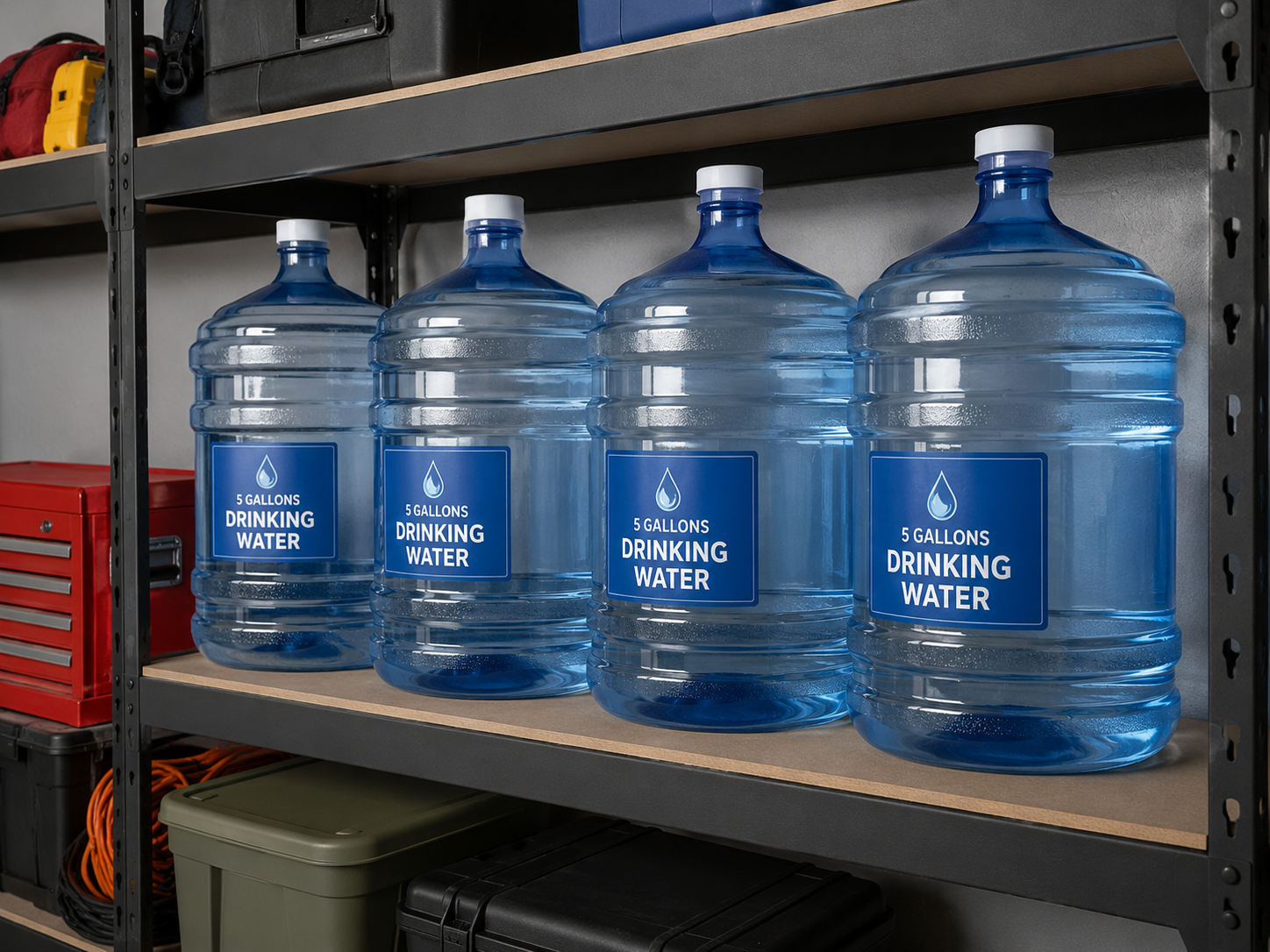
5-Gallon Water Containers
Reusable water containers are popular among preppers because they provide a balance between capacity and portability.
Pros:
- Durable
- Reusable
- Easier to move than barrels
Cons:
- Limited storage capacity
- Can be bulky to store large numbers of them
55-Gallon Water Barrels
Water barrels provide substantial long-term storage capacity.
Pros:
- Large storage volume
- Cost effective per gallon
Cons:
- Difficult to move once filled
- Requires periodic maintenance
Emergency Bathtub Water Storage Systems
For families expecting an approaching disaster, bathtub storage systems provide one of the fastest ways to store a large quantity of water.
Products such as the WaterBob and Aquapod can transform an ordinary bathtub into a large emergency water reservoir.
WaterBob vs Aquapod Comparison
Current price of the 100 Gallon WaterBob on Amazon
Current price of the 65 Gallon Aquapod on Amazon
How Long Can Stored Water Last?
The lifespan of stored water depends on several factors:
- Container quality
- Storage temperature
- Exposure to sunlight
- Initial water quality
Commercially bottled water often remains usable for years when stored properly.
Water stored in reusable containers should be rotated periodically according to manufacturer recommendations.
How Long Does Bottled Water Last?
Don’t Forget Water Filtration
Even the best water storage plan can eventually run out.
Every emergency preparedness plan should include a backup method for obtaining safe drinking water.
Popular options include:
- Gravity filters
- Portable water filters
- Water purification tablets
- Boiling
- UV purification systems
Having both stored water and filtration capabilities provides significantly greater resilience during long-term emergencies.
Aquatabs Water Purification Tablets – Check Price on Amazon
Building a Practical Family Water Plan
A realistic emergency water plan for a family of four might include:
- 24 gallons of bottled water
- Two 5-gallon containers
- A water filtration system
- An emergency bathtub storage system for approaching disasters
This layered approach provides both immediate access and long-term flexibility.
Many families find that combining several storage methods offers better preparedness than relying on a single solution.
Final Thoughts
Water is one of the most important emergency supplies your family can store. While food often receives the most attention, a lack of clean water can quickly become a serious problem during disasters.
For most families, aiming for at least a two-week supply is a practical goal. Combining bottled water, reusable containers, filtration systems, and emergency bathtub storage solutions can provide peace of mind and help ensure your family remains prepared when unexpected events occur.
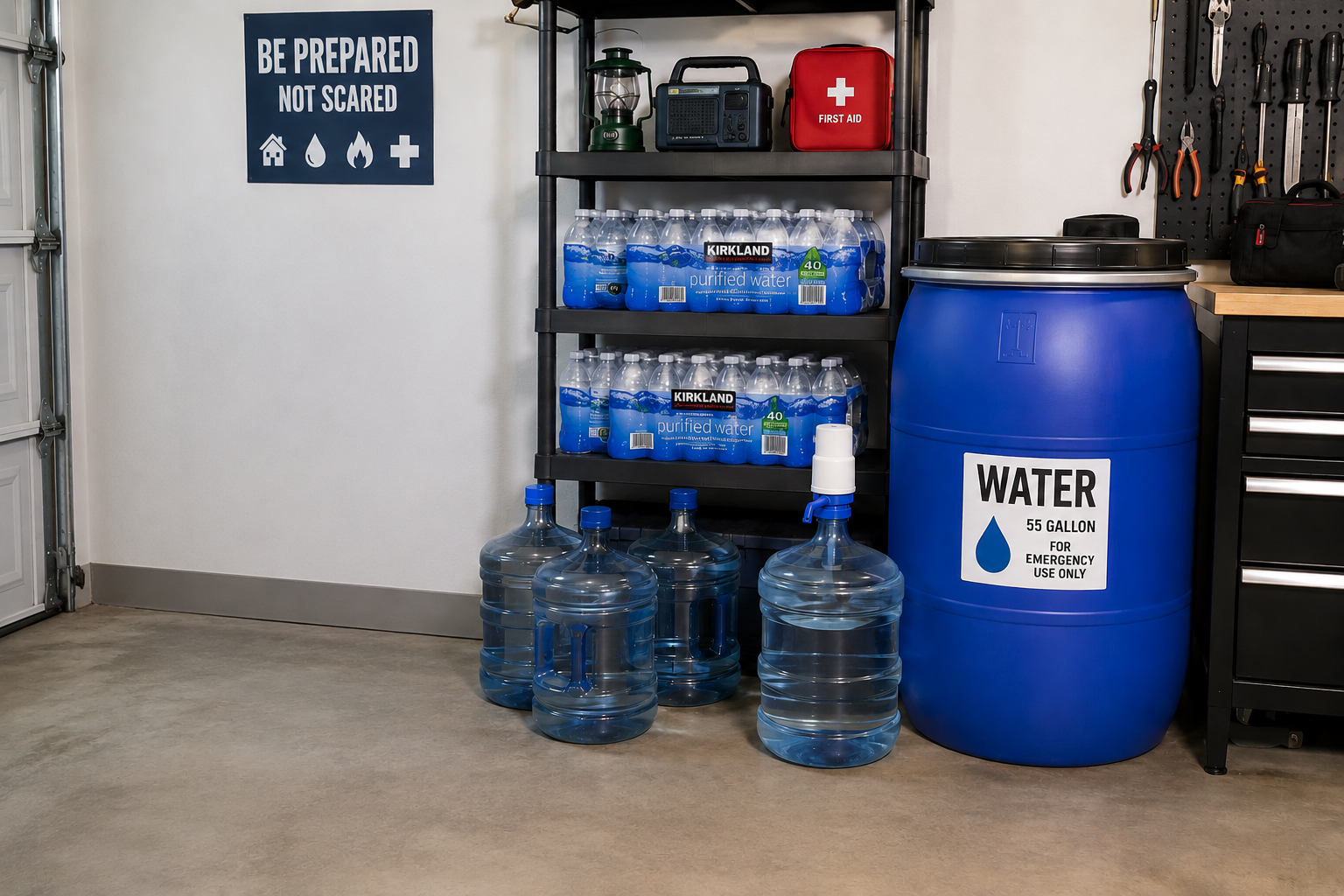
Before purchasing any water storage system, take time to evaluate your family’s needs, available storage space, and likely emergency scenarios. A well-planned water strategy can make a significant difference when normal utilities become unavailable.